
Homeowners: Patio Installation Cost $6–$40/sq ft and Bid Checklist
Homeowners: Patio Installation Cost $6–$40/sq ft and Bid Checklist
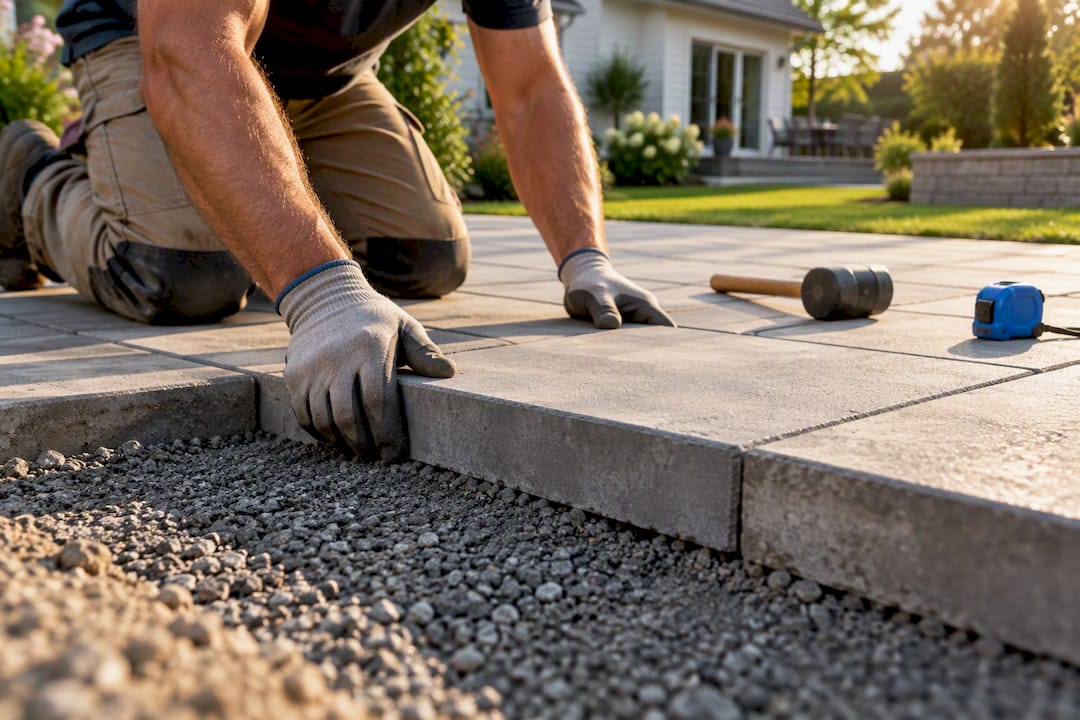
A patio installed by a professional typically runs $6 to $40 per square foot, with material choice driving most of that spread. A small 100 square foot patio often lands between $1,200 and $4,000, a mid-size 200 to 300 square foot patio between $2,800 and $12,000, and a large 400 square foot-plus patio between $6,000 and $20,000 or more. Material, site prep, and labor rates are the three levers that decide where you land in that range.
TL;DR:
- Material choice has the largest impact on cost, with natural stone reaching up to $40 per square foot and decomposed granite staying below $15.
- Larger patios tend to cost less per square foot because fixed site preparation and mobilization fees are spread across a bigger area.
- Proper site prep, including excavation and base compaction, is essential for longevity and can add $1 to $3 per square foot to the total cost.
- DIY installation may save money on materials but risks higher costs if improper groundwork leads to cracking or shifting later.
- A typical professional patio installation costs between $6,000 and $20,000 for 400 square feet, varying significantly based on material, size, and site complexity.
Table of Contents
- How Much Does a Patio Installation Cost by Material?
- What Does a Patio Cost by Size?
- What Site Prep Costs Add to a Patio Quote
- Is DIY Patio Installation Actually Cheaper?
- What Do Patio Add-Ons Cost?
- How to Get and Compare Patio Contractor Estimates
- How the Labor and Material Split Usually Breaks Down
- How Best Service Local Simplifies the Contractor Search
- Find and Compare Patio Contractors Near You
- Sources
- FAQ
How Much Does a Patio Installation Cost by Material?
Material choice is the single biggest swing factor in your final bill, and it’s not just the unit price of the stone or concrete. It’s how much labor it takes to cut, level, and fit that material.
Plain poured concrete sits at the affordable end. A standard broom-finish slab commonly runs $6 to $12 per square foot installed, while stamped or colored concrete with decorative texture jumps to roughly $12 to $22 per square foot once you factor in the extra labor for pattern work and sealing. Pavers cost more upfront but forgive mistakes better, since a cracked unit can be popped out and replaced without redoing the whole surface. Expect $12 to $30 per square foot installed for concrete or brick pavers, with premium tiers and intricate patterns pushing that toward $16 to $35 per square foot once you add excavation and demolition costs.
Here’s how the main options stack up on installed price and upkeep:
- Plain poured concrete: $6 to $12 per square foot; low maintenance but prone to cracking over time and hard to repair invisibly.
- Stamped or colored concrete: $12 to $22 per square foot; needs resealing every 2 to 3 years to keep the color from fading.
- Concrete or brick pavers: $12 to $35 per square foot; individual units are replaceable, and the surface tolerates ground movement better than a solid slab.
- Natural stone (flagstone, bluestone): $15 to $40 per square foot; the highest material cost but the longest lifespan, often outlasting the house’s other exterior finishes.
- Porcelain pavers: $20 to $35 per square foot; virtually stain-proof and fade-resistant, but a niche product with fewer installers experienced in it.
- Decomposed granite or gravel: $6 to $15 per square foot; the cheapest option, but it migrates over time and needs periodic topping off.
Decorative finishes and intricate patterns add real labor hours regardless of material. If controlling the budget matters more than a showpiece patio, a simpler design in a standard finish will save you money on nearly every material category.
What Does a Patio Cost by Size?
Bigger patios cost more in total, obviously, but they usually cost less per square foot. That’s because a chunk of every project’s price is fixed. Delivery fees, equipment mobilization, and minimum labor charges get spread across more area on a larger job, which pulls the per-square-foot number down even as the total climbs.
- Small patio (around 100 square feet): Expect roughly $1,200 to $4,000 total. This size often carries the highest per-square-foot rate because mobilization and minimum-fee costs barely get diluted.
- Medium patio (200 to 300 square feet): A national baseline puts a typical installed project around $4,200 for roughly 288 square feet, with a broader range of $2,800 to $7,500 depending on material and site conditions.
- Large patio (400 square feet or more): Totals commonly run $6,000 to $20,000, and elaborate stone or porcelain installs can clear $15,000 on the high end.
Shape matters as much as size. Curved edges, cutouts around trees, and multi-material borders all generate waste. Plan for a 5% to 15% material waste allowance on straight-edge jobs, and closer to 15% or more on herringbone or multi-size paver patterns where every cut piece that doesn’t fit becomes scrap.
What Site Prep Costs Add to a Patio Quote
The number a contractor quotes per square foot rarely includes everything happening underground, and that’s where budgets quietly blow up. A patio is only as good as its base, and building that base correctly is not optional.
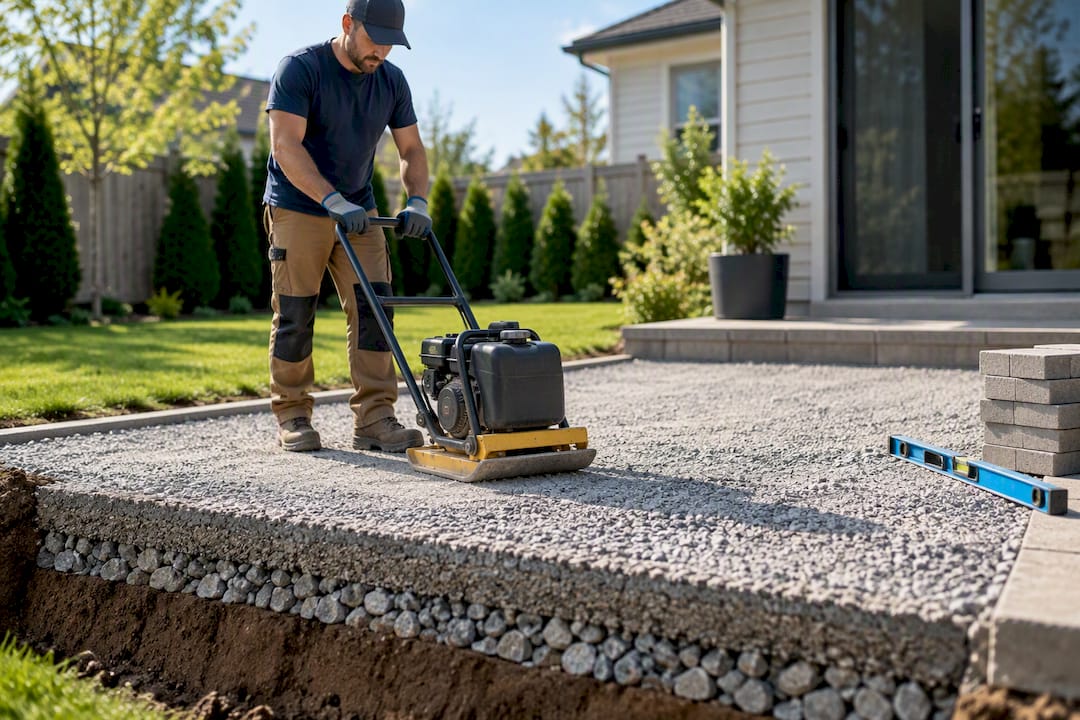
Pro Tip: Ask every contractor to specify base depth in writing. A patio poured over 2 inches of loose gravel will heave and crack within a few years, while proper prep can add decades to its life.
A hardscape base typically requires:
- Excavation: removing 6 to 10 inches of native soil, often priced at $1 to $3 per square foot depending on soil type and access.
- Compacted aggregate base: 4 to 6 inches of crushed angular stone, commonly required for a stable surface, adding roughly $1 to $2.50 per square foot.
- Geotextile fabric: a separator layer for problem or clay-heavy soils, typically $0.20 to $0.60 per square foot.
- Compaction and grading: mechanical compaction to prevent settling, often bundled into the excavation line item.
- Hauling and demolition: removing an old patio, deck, or excess soil, which can add $500 to $2,500 depending on volume and disposal fees.
Slopes, mature tree roots, poor equipment access, and drainage tie-ins all add cost beyond these baseline numbers. Region matters too: local labor rates and material availability can swing an installed estimate by 20% to 40% between markets, which is why a national average is only a starting point. Many municipalities also require a permit for patios above a certain size or those tied into drainage systems, and permit fees plus inspection scheduling can add both cost and weeks to your timeline.
Is DIY Patio Installation Actually Cheaper?
Materials alone for a DIY paver or concrete patio often run $3 to $12 per square foot, versus $12 to $35 per square foot fully installed. That gap looks tempting, but it hides where the real risk sits.
- Base excavation and compaction are the tasks most likely to go wrong without experience, and a poorly compacted base is the number one cause of cracking and shifting.
- Drainage grading is easy to get wrong on a DIY job, and a patio that slopes toward the house instead of away from it can cause foundation problems.
- Cutting pavers or stone around curves and edges wastes material fast without the right tools, often erasing whatever labor savings you expected.
Pro Tip: If you’re set on DIY, hire a pro just for the excavation and base compaction, then lay the surface material yourself. That single hybrid move eliminates most of the failure risk while still cutting labor costs.
Hiring a professional makes the most sense whenever drainage, grading, or a sloped lot is involved, since DIY projects that skip proper preparation tend to fail in ways that cost more to fix than they saved. Professional installers also typically back the work with a labor warranty, something a DIY job never carries.
What Do Patio Add-Ons Cost?
Once the core patio is budgeted, the upgrades are where projects either stay on track or spiral. Knowing typical ranges upfront keeps you from getting surprised mid-project.
- Built-in fire pit: $1,500 to $6,000 depending on materials and whether it’s wood-burning or gas-fed.
- Seat wall or retaining wall: $30 to $100 per linear foot, varying with height and material.
- Low-voltage lighting: $800 to $2,200 for a basic path and accent lighting package.
- Pergola or shade structure: $2,500 to $10,000 depending on size and materials.
- Outdoor kitchen or built-in grill station: $5,000 and up, with utility runs adding significantly to the total.
Gas lines and electrical work require licensed trades, and pulling a permit for that scope is standard in most jurisdictions. If your budget doesn’t cover the full wish list now, electrical work like lighting circuits is far easier to add during the initial base excavation than to trench in later. Build the core patio surface first, and treat heavy upgrades like a full outdoor kitchen as a phase-two project once the base investment is proven.
How to Get and Compare Patio Contractor Estimates
A written estimate that’s missing key details is a red flag before you even get to price. Compare bids on substance, not just the bottom-line number.
- Confirm scope in writing: square footage, material specified by brand or grade, and exact base depth (not just “properly prepped”).
- Check drainage plans: ask how the contractor will grade the patio away from your home’s foundation and where water exits the site.
- Verify licensing and insurance: request a copy of the contractor’s license number and proof of liability insurance before signing anything, and run a background check on any contractor you haven’t worked with before.
- Ask for recent references: a contractor with three years of local patio jobs should have no trouble providing two or three addresses you can drive by.
- Clarify warranty terms: find out whether the warranty covers labor only, materials only, or both, and for how long.
- Compare lump-sum vs. hourly bids carefully: a lump-sum quote protects you from scope creep, while an hourly or time-and-materials bid shifts risk onto you if the job runs long.
Treat a bid that’s dramatically lower than the others with suspicion. It usually means shallower base depth, no geotextile fabric, or a plan to skip permitting, all of which show up later as cracking or code violations.
How the Labor and Material Split Usually Breaks Down
On most professionally installed patios, materials account for roughly 40% to 50% of the total cost, with labor making up the remaining 50% to 60%. That ratio shifts depending on complexity. A plain concrete slab skews more toward labor efficiency since crews can pour and finish large areas quickly, while an intricate paver pattern or natural stone layout skews toward labor because of the cutting, leveling, and fitting time each unit demands.
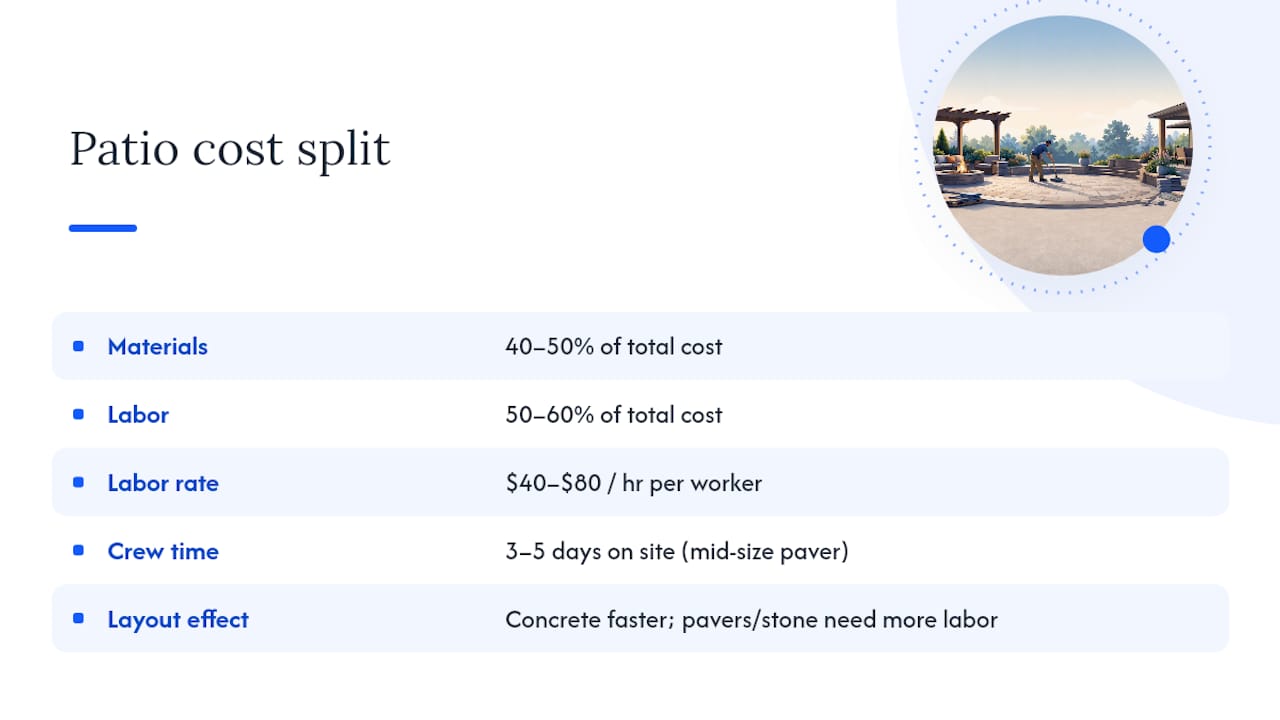
Typical labor rates for patio installation crews run $40 to $80 per hour per worker, though most contractors price by the job rather than the hour once they’ve assessed the site. A two- or three-person crew installing a mid-size paver patio might spend three to five days on site: one day for excavation and base work, one to two days for laying material, and the remainder for edging, jointing, and cleanup. Concrete jobs often move faster on install day but require a curing period before the patio can bear weight or furniture.
Understanding this split helps you evaluate a quote. If a bid seems unusually cheap on materials but the labor line is thin, that’s often where corners get cut on base depth or compaction time, the exact prep work that determines whether your patio lasts 10 years or 25.
How Best Service Local Simplifies the Contractor Search
Getting three solid, comparable bids is the single best thing you can do to control your patio budget, and it’s also the step most homeowners skip because finding qualified local contractors takes time. A good contractor marketplace addresses that friction point by allowing users to search by service type and ZIP code to access verified business profiles instead of unvetted names.
During the bidding phase, that verification matters. You can pull up multiple patio installers serving your area side by side, check their listed details, and start conversations with more than one contractor before committing. That kind of comparison is what turns a single opaque quote into a real negotiation, and it’s the same principle behind the estimate checklist above: you can’t judge a bid in isolation.
The platform won’t pour your base or lay your pavers, but it shortens the distance between “I need a patio” and “I’m talking to three qualified local contractors” considerably.
— Service
Find and Compare Patio Contractors Near You
There are platforms designed to help you find out what a patio might actually cost in your ZIP code from contractors you can trust. Rather than cold-calling names from a search engine, you search by service type and location and land on verified business profiles you can compare side by side.

That comparison view is the point. Instead of collecting quotes one phone call at a time and trying to remember which contractor mentioned a warranty and which didn’t, you can review multiple local patio installers in one place before you ever pick up the phone. Start your search at Bestservicelocal by entering your ZIP code and “patio installation” to see which verified providers serve your area, then use the contractor checklist above to compare their quotes line by line.
Sources
- Concrete Patio Cost Calculator 2026 — Poured, Stamped & Colored | Cost My Yard
- How Much Does It Cost to Build a Patio? 2026 Pricing | BuildMat Insight
FAQ
How Much Does a 20x20 Patio Cost?
A 20x20 patio is 400 square feet, which typically lands between $6,000 and $20,000 installed depending on material. Concrete sits at the lower end of that range, while natural stone or premium pavers push it toward the top, and per-square-foot pricing usually improves slightly at this size since fixed mobilization costs spread across more area.
How Much Does a 12x12 Patio Cost?
A 12x12 patio is about 144 square feet, generally costing roughly $1,200 to $4,000 installed. This size sits close to the small-patio category, so expect a somewhat higher per-square-foot rate than a larger project since minimum labor and delivery fees get spread across less area.
How Much Is a 10x20 Patio?
A 10x20 patio covers 200 square feet, typically running between $2,800 and $7,500 installed for concrete or standard pavers, with national baseline data showing many mid-size projects near this range averaging around $4,200 for a similarly sized layout. Premium materials like natural stone or porcelain can push the total considerably higher.
Is It Cheaper to Pour Concrete or Install Pavers?
Plain poured concrete is generally cheaper, running about $6 to $12 per square foot installed compared to $12 to $30 per square foot for pavers. Pavers cost more upfront but are easier and cheaper to repair long-term since individual units can be swapped out instead of replacing an entire cracked slab.
What’s the Biggest Factor in Patio Installation Cost?
Material choice drives the widest swing in price, but site prep and base depth determine whether that price holds up over time. A cheap material installed on a properly excavated and compacted base often outlasts an expensive material installed on a shortcut foundation.