
Contractor Background Checks: What to Verify Before You Hire
Contractor Background Checks: What to Verify Before You Hire

Before you hand over a deposit, run three quick checks on any contractor: verify their license at your state licensing board, confirm active insurance by calling the carrier directly, and speak with two recent local references. Most of these checks are free and take under two hours total.
- Verify the license. Look up the contractor’s license number on your state’s official portal (examples: CA CSLB, TX TDLR). Confirm the classification matches your project, the license is current, and no disciplinary actions are on record. Per the federal consumer hiring guide, many states require contractors to be licensed and to pull permits.
- Confirm insurance and bonding. Ask for the ACORD Certificate of Insurance (COI). Then call the insurer listed on it to confirm the policy is active and the limits cover your project type. A COI handed to you by the contractor alone is not proof — carriers can confirm coverage in minutes.
- Call references and scan reviews. Ask for two references from jobs completed in the last 12 months, ideally nearby. Cross-check the contractor on Google Reviews, Yelp, and the Better Business Bureau for complaint patterns.
Pro Tip: Set aside 90 minutes on a weekday morning. State board lookups are instant. The insurer call takes 5–10 minutes. Reference calls take 10–15 minutes each. The whole process costs nothing for the core checks.
Stop the process immediately if a contractor refuses to provide a license number or COI, or insists on cash-only payment upfront.
Key Takeaways
Running contractor background checks takes under two hours and costs nothing for the core checks — license lookup, insurance confirmation, and reference calls are all free.
| Point | Details |
|---|---|
| License first, always | Verify the license number, classification, and expiration directly on your state board’s site. |
| Call the insurer yourself | A contractor-supplied COI is not proof; call the carrier to confirm the policy is active. |
| Cross-check reviews | Look for complaint patterns across Google Reviews, Yelp, and the BBB — not single reviews. |
| Marketplace checks have limits | Platform screening may cover only three years of criminal history; always verify independently. |
| Use Local AI Page to discover | Search by ZIP on Local AI Page to find and compare local contractor profiles before you call. |
Table of Contents
- How to run a complete contractor background check
- What a homeowner actually learns from doing this
- Local AI Page helps you find and compare vetted local contractors
- Sources
How to run a complete contractor background check
Work through these steps in order. Each one builds on the last.
1. Look up the license first
Go directly to your state’s licensing board website. Search by the contractor’s name or the license number they give you. Confirm four things: the license number matches, the classification covers your project (a plumbing license does not cover electrical work), the expiration date is in the future, and there are no open disciplinary actions or suspensions. The National Home Services Authority confirms that license verification must be done on the issuing state board’s own site — not a third-party summary.
2. Verify insurance and bond separately
Verification is a three-part process: license (state board), bond (contact the surety or request the bond certificate), and insurance (call the insurer named on the ACORD COI). Ask for the insurer’s direct phone number from the COI itself, then call and ask whether the policy is active, what the coverage limits are, and whether your project type is covered. Fabricated or lapsed COIs are the most common fraud vector in home contracting.

3. Check references and inspect past work
Ask for at least two references from jobs finished in the last year, in your area if possible. When you call, ask three things: Did the contractor finish on time? Were there unexpected charges? Would you hire them again? The BBB’s contractor hiring guide also recommends asking what ID workers will show at your home and whether the contractor runs background checks on their own employees and subcontractors.
4. Review online reputation across multiple platforms
Check Google Reviews, Yelp, and the BBB. Look for patterns, not isolated complaints. One bad review in 50 is noise. Three complaints about the same issue — billing disputes, abandoned jobs, no-shows — is a signal. A 14-point vetting checklist from FixitReal recommends cross-referencing at least three platforms and verifying a physical business address, not just a phone number.
5. Understand the limits of criminal and civil record checks
As a homeowner, you can search public court records through your county courthouse or a state court portal. These searches are free but time-consuming and inconsistent across jurisdictions. Marketplace platforms like Angi/HomeAdvisor do run some screening, but Consumer Reports found that some platform checks look back only three years for criminal convictions and one year for civil judgments. Treat marketplace screening as a starting point, not a substitute for your own checks.
6. Handle concerning results before you sign
If a license shows a past suspension, ask the contractor directly what happened and whether it was resolved. If references are vague or unavailable, that alone is a reason to pause. Require a written contract that includes the license number, start and completion dates, a payment schedule tied to milestones (not a large upfront sum), and a clause naming who is responsible for pulling permits and site cleanup. For debris removal and construction cleanup responsibilities, spell out exactly what the contractor removes versus what you handle.
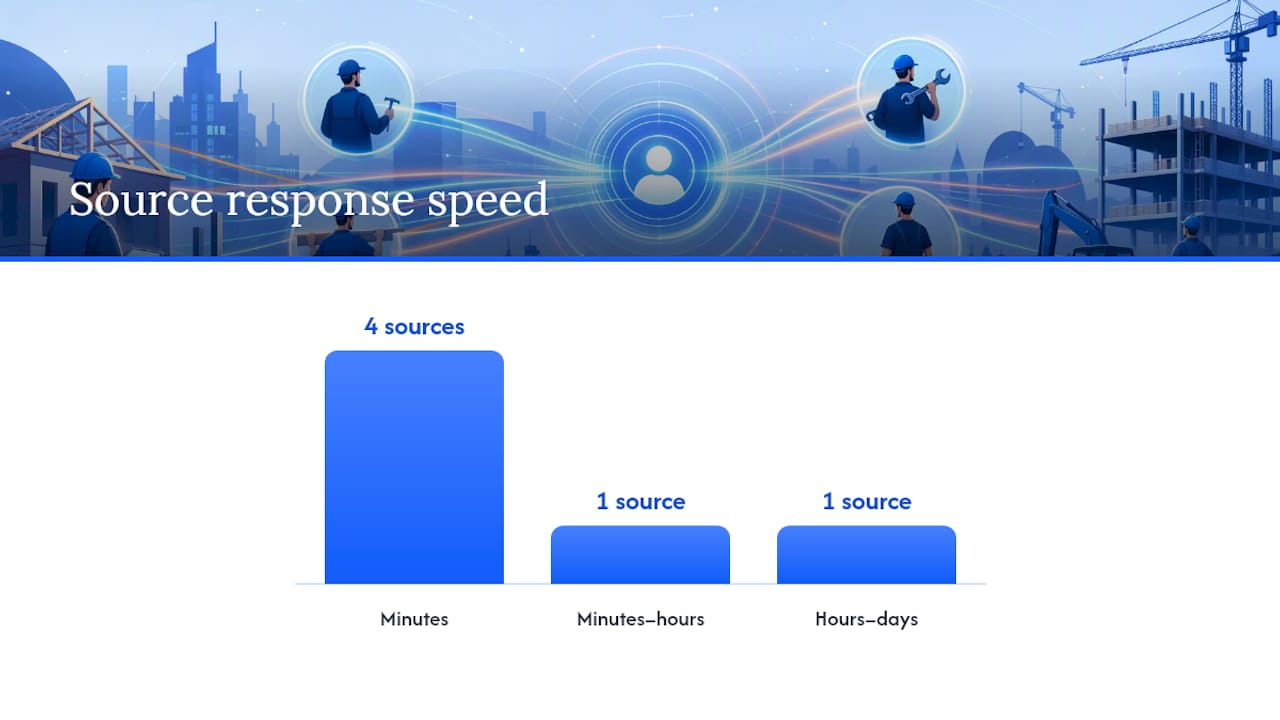
Comparison: where to run each check
| Source | What it checks | Coverage | Cost | Speed | Verification level |
|---|---|---|---|---|---|
| State licensing board | License, classification, expiration, discipline | State-level | Free | Minutes | Documented/official |
| Better Business Bureau | Complaints, ratings, business longevity | National | Free | Minutes | Self-reported + mediated |
| Google Reviews / Yelp | Recent customer reviews, photos | Local/national | Free | Minutes | Self-reported |
| Angi / HomeAdvisor | Marketplace screening, license spot-checks | National | Free (for homeowners) | Minutes–hours | Partial; documented limits |
| Local AI Page | Consolidated profiles, service area, contact info, reviews | ZIP-level local | Free | Minutes | Profile-based discovery |
| State court records | Civil judgments, liens, criminal records | County/state | Free–low cost | Hours–days | Public record |
What a homeowner actually learns from doing this
Most articles tell you to “do your research.” Here is what that actually looks like in practice.
You call a roofer. Before you schedule the estimate, you spend 10 minutes on your state board’s site. The license is active, the classification is right, and there are no complaints. Good start. You ask for the COI, call the insurer, and confirm the policy. You call one reference who says the crew left the yard clean and finished two days early. You check Google Reviews and see 23 reviews averaging 4.7 stars, with consistent mentions of punctual crews.
When the contractor arrives, ask these three questions directly:
- “Will you pull the permits, or do you expect me to?” A licensed contractor should pull their own permits. If they suggest you pull them to “save money,” walk away — that shifts liability to you.
- “How do you handle change orders?” The answer should be: in writing, signed by both parties, before any additional work begins.
- “Who will be on-site daily — your employees or subcontractors?” If subcontractors, ask whether they are licensed and insured separately.
Watch for these on-site signals: a branded vehicle or marked equipment, a crew that introduces themselves, and a worksite that stays organized. Contractors who respect your property during the estimate tend to respect it during the job. Travelers also recommends favoring contractors with more than five years in business and a verifiable physical address, not just a cell number.
Require a cleanup clause in the contract. If the scope involves demolition or significant debris, confirm in writing who handles deck or structure removal and disposal before work begins.
Local AI Page helps you find and compare vetted local contractors
State boards verify licenses. The BBB tracks complaints. But neither tells you which licensed, insured roofer or HVAC tech is actually working in your ZIP code right now.

Local AI Page fills that gap. Enter your ZIP code and you get consolidated profiles for local contractors in your area, including service categories, contact details, customer reviews, photos, and service area information. You can compare several contractors side by side before you pick up the phone, which cuts the time you spend on initial outreach. Think of it as the discovery layer: Local AI Page surfaces who is available and what they do; your state board confirms the license is real.
Use Local AI Page to shortlist two or three contractors, then run the license and insurance checks on each one before you invite anyone out for an estimate. Search local contractors by ZIP code to get started.
Sources
- Hiring a Contractor (GPO consumer guide)
- How to Verify a Home Services Contractor — National Home Services Authority
- How to hire a reliable and trustworthy general contractor — BBB
- Can you find a good contractor online? — Consumer Reports
- How to vet a contractor: the 14-point checklist — FixitReal